
SJMC Rehabilitative Services begins testing watson.my for referral-led care
At SJMC, rehabilitation starts with a doctor’s referral—often photographed and sent after hours. watson.my is being tested to turn that document-led process into a controlled, review-first workflow.
By Manreet Kaur
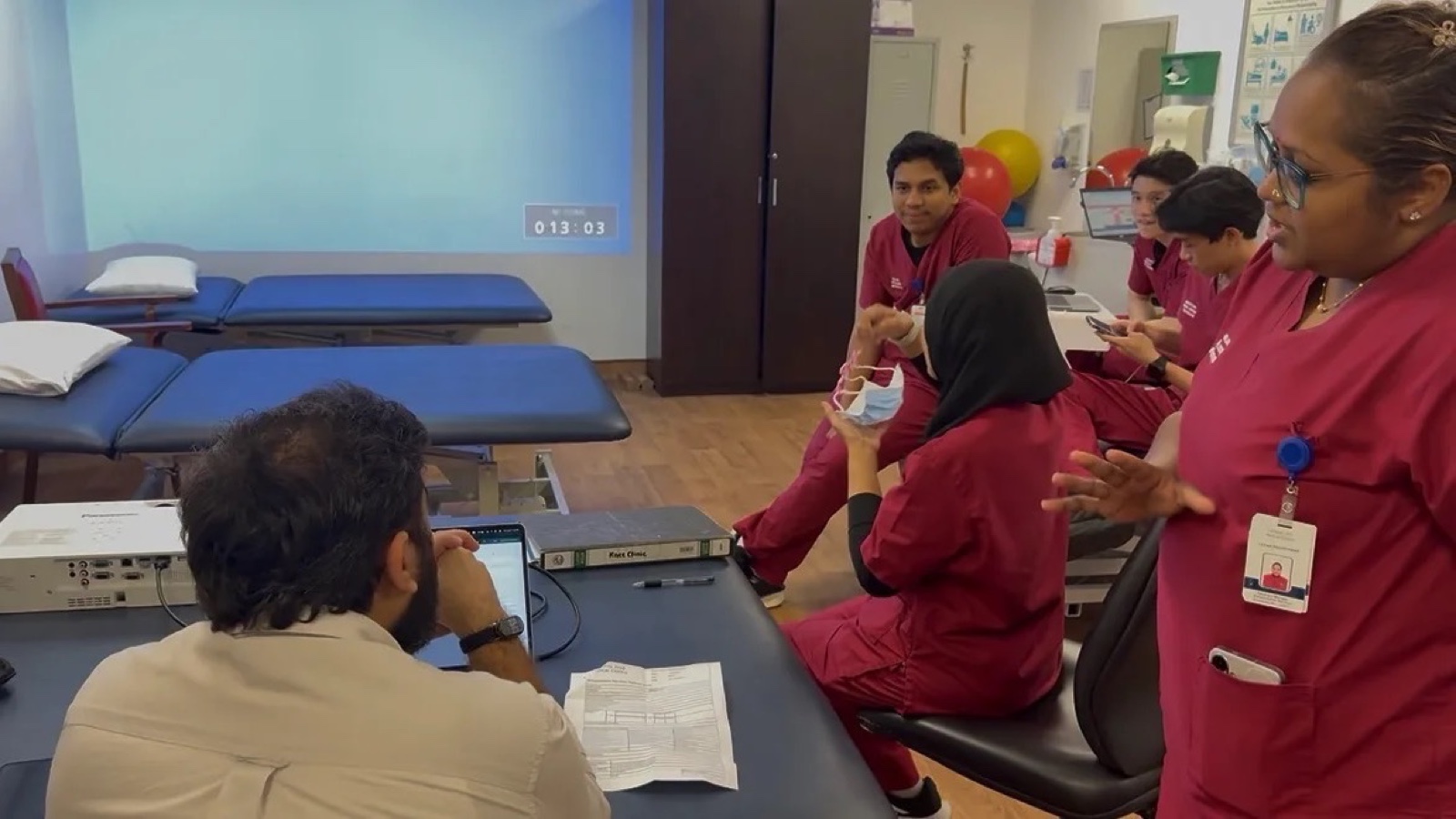
At Subang Jaya Medical Centre, a rehabilitation booking begins before any calendar opens. A doctor’s referral determines what is being treated, how many sessions are approved, and sometimes which therapist should deliver them. When that referral arrives as a phone photograph over WhatsApp after the department has closed, one message carries an entire document-reading, review, and scheduling workflow.
SJMC Rehabilitative Services has begun internal testing of watson.my against that workflow. The objective is not to remove professional judgement. It is to move the reading, counting, matching, and follow-up into a controlled system while keeping department approval between document extraction and patient booking.
The operational constraint is hidden inside the referral
A rehabilitation referral is not simply an attachment. It contains the rules for what may happen next: the treatment area, the session entitlement, and any named therapist. Those details must be understood before availability is offered, and they must be checked by the people responsible for the patient’s care.
The administration continues after a booking is made. Every attended session changes the remaining entitlement. A cancellation can either restore a session or consume it, depending on notice. Once the approved sessions are exhausted, a new referral is required. Each rule is small; together they create a front-desk workload that cannot be solved by a calendar alone.
A review-first workflow, not an open-ended chatbot
In the workflow now being tested, watson.my reads the referral image as it arrives and returns the relevant details in plain language for confirmation. If the photograph is not clear enough, the system asks for a clearer image. It does not invent missing information or push the conversation into a booking.
The referral is then held for the SJMC team to review. Only after that approval does the booking conversation proceed. Patients without a referral follow a separate path to an initial consultation, while referral-led patients move through the service, therapist, availability, and entitlement rules that apply to them.
Session usage and cancellation outcomes remain part of the same record, so the next conversation begins with the correct remaining entitlement rather than somebody’s memory or a disconnected spreadsheet.
Internal testing comes before patient use
The current stage is internal testing inside SJMC Rehabilitative Services. The department’s team is putting watson.my through the workflow referral by referral before patients use it. That distinction matters: the system is being tested against the department’s operating rules, not presented as a completed public rollout.
In a healthcare workflow, a confident guess is still a failure. The design therefore makes uncertainty visible, preserves the human review point, and limits automation to the actions the department has approved. The people remain responsible for the judgement; the system is expected to carry the coordination around it.
What this deployment says about serious AI systems
For AlphaSquad, the work is a concrete example of production AI being shaped around an operating process rather than layered over it. The valuable part is not producing a conversational answer. It is turning an unstructured input into the correct next action, with explicit rules for identity, approval, scheduling, exceptions, and record-keeping.
The same engineering pattern applies well beyond healthcare: understand what arrived, structure it, stop when human authority is required, then resume with the right context. SJMC’s rehabilitation workflow makes those boundaries unusually clear—and therefore worth testing carefully.
Detailed implementation note
Read the full operational account from watson.my, including the referral, approval, booking, and session-counting rules being tested at SJMC Rehabilitative Services.
Read the watson.my story ↗